
Deciding to enter dental school is a major financial decision. On average, dental school graduates owed $297,800 upon graduating from their programs in 2025, according to the American Student Dental Association (ASDA).
The overwhelming majority of dental school students take on student loans, so understanding repayment options like loan forgiveness, alternative payment plans, and student loan refinancing are key to make a high balance more manageable.
Key Takeaways
- On average, class of 2025 graduates owed $280,300 in dental school student loans.
- Approximately 82% of students take out student loans for dental school.
- Loan repayment strategies include pursuing loan forgiveness, enrolling in alternative payment plans, and student loan refinancing.
How Much Student Loan Debt Do Dental School Graduates Have?
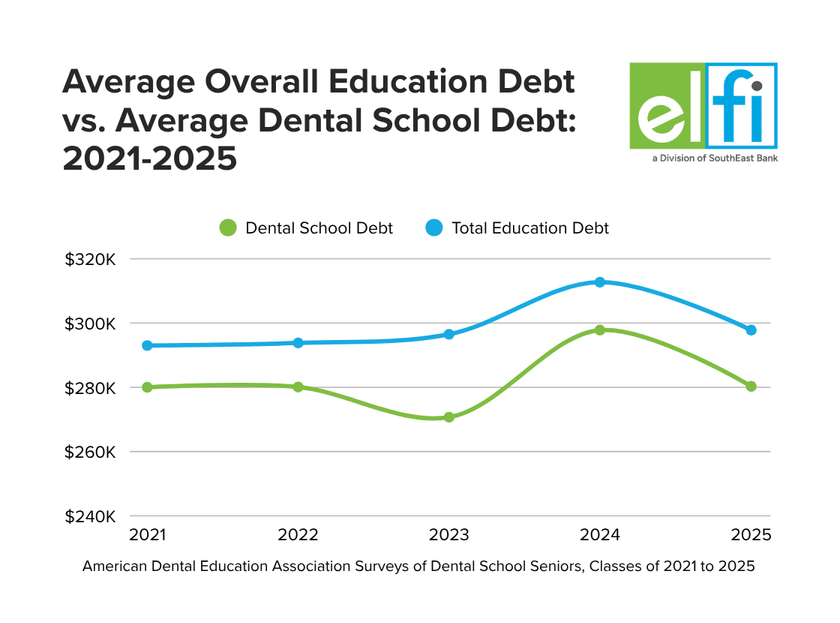
As of 2025, dental school graduates leave their programs with $297,800 in total education debt. Approximately $280,300 of that amount is solely from their dental school programs.
Dental school debt makes up 94% of graduates’ total education loan balances, with their undergraduate programs making up just 6% of their total education debt.
How Has Dental School Debt Changed Over Time?
Although dental school debt has risen, the increase hasn’t been constant; rates have fluctuated over the past few years. In 2021, the average total education debt for dental school graduates was $293,000, according to the American Dental Education Association (ADEA). That number is just 1.6% lower than the average balance in 2025. Those numbers are unadjusted for inflation, so the costs are even closer.
The chart below shows how dental school debt has fluctuated over time:
What Factors Affect Dental School Debt?
Several factors affect dental school debt, including tuition costs, changes to the federal student loan system, and rising interest rates on student loans.
Rising Tuition Costs
On average, dental school programs cost $258,187 as of 2025, according to the ADEA. At public universities, the average cost was $188,009, while the cost at private schools was $354,984.
Those prices are higher than that of past years, so students need to take on more loans or use other financial aid to cover the cost.
Changing Federal Loan Programs
The One Big Beautiful Bill made substantial changes to federal student aid programs, including eliminating Grad PLUS Loans. New dental school students only have one federal student loan option, Direct Unsubsidized Loans. Plus, the bill set new annual and aggregate borrowing maximums, so students may need to take out private loans to cover additional expenses.
Increased Interest Rates
Interest rates on student loans have increased rapidly. As of the 2026-2027 academic year, the interest rate on federal Direct Unsubsidized Loans was 8.07%, according to the Office of Federal Student Aid. In 2021, the rate was just 6.54%, so borrowing money to pay for dental school has become much more expensive.
Dental School Education Debt Repayment Options
If you have a significant amount of debt from dental school, there are three main ways to manage your debt:
1. Loan Forgiveness
Loan forgiveness programs like Public Service Loan Forgiveness are best for federal student loan borrowers who work for government agencies or non-profit organizations. After meeting the program’s service requirements, the government will discharge your remaining loan balance.
2. Income-Driven Repayment Plans
If your payments under a standard repayment plan are too high, you may be eligible for an income-driven repayment (IDR) plan. These plans recalculate your payments based on a percentage of your discretionary income, so recent dental school graduates may qualify for a much lower payment amount.
3. Student Loan Refinancing
Refinancing your dental school loans can make your payments more affordable and reduce your overall repayment cost. Best for borrowers with high-interest private loans, student loan refinancing replaces your existing loans with one new loan with different terms.
You can use ELFI’s Check My Rate tool to check your eligibility and view your loan options without hurting your credit.
Learn More: How to Refinance Your Dental School Loans
FAQs
What is the average dental school debt today?
On average, dental school graduates leave school with nearly $300,000 in student loan debt.
Is dental school debt higher at public or private schools?
Dental school debt is usually higher at private schools than public universities due to the higher cost of attendance.
How long does it take to pay off dental school debt?
How long it takes to pay off your dental school student loans depends on your balance, interest rate, and how much money you can dedicate to your payments, but most borrowers are in repayment for 10 to 30 years.
Do most dental students graduate with loans?
Yes, the majority of dental school graduates — 82% — have student loan debt when they leave school.
Is dental school worth the cost given the debt?
Dental school can be worth the cost since dentists can earn higher-than-average salaries. But students should consider the total cost of attendance and typical student loan balances before choosing a career path.
Information contained in this blog is for educational and informational purposes only. Nothing contained in this blog should be construed as financial, legal or tax advice. An attorney, financial advisor, and/or tax advisor should be consulted for advice based on your circumstances.
Links to other websites or references to services or applications are provided as a convenience only. A link does not imply ELFI’s sponsorship or approval of any other site, service or application. ELFI does not control the content of these sites, services or applications.